A buyer lands on your pricing page at 8:47pm. They have one question.
Your website hands them a form. Name, email, company, and “someone will be in touch”.
Plenty of people don’t bother. They close the tab and look elsewhere.
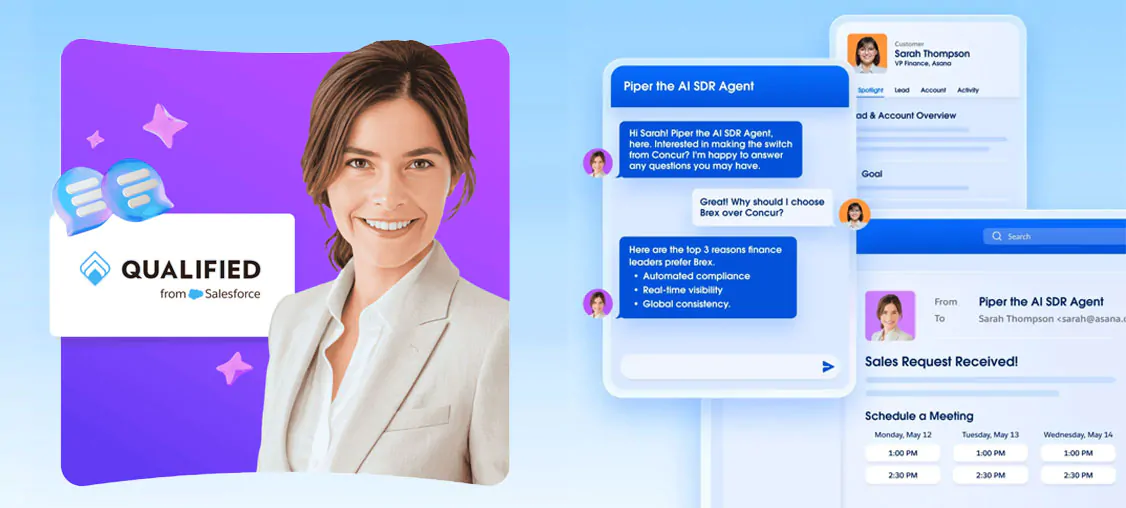
Piper gives them a conversation instead. It’s the AI sales agent Salesforce built to chat with your website visitors the moment they arrive, at any hour. It’s like having your best salesperson on chat 24/7: answering questions, checking fit, and booking the good ones straight into your team’s calendar.
Who Piper is for and how it works
Piper is for any business that sells to other businesses and gets leads through its website. If buyers visit your website when your team isn’t around to talk, it’s built for you.
Piper was built by Qualified, which Salesforce agreed to buy in late 2025. More than 500 companies were already using it.
- It comes with its sales skills built in. Website chat, email follow-up, meeting booking and handing leads to reps are ready to go. You switch on the ones you need.
- It chats with buyers on your website. Visitors can talk to it by text, voice or video, at any hour, and it follows up by email too.
- It reads your Salesforce records. Leads, contacts, accounts and opportunities, so it knows who it’s talking to.
- It follows your rules. Your definition of a good lead, your routing rules and your territories decide who gets a meeting, and with whom.
- It only says what you’ve approved. Piper answers from the content you point it to, like product pages and FAQs.
- It keeps your team in the loop. Every conversation is saved in Salesforce, and reps get a Slack alert with prep notes before each meeting.
Piper works inbound only, meaning it talks to people who come to you. Reaching out to new prospects is a job for Hunter, Salesforce's outbound agent.
And Piper doesn't close deals. It gets the right people to your sellers, faster.
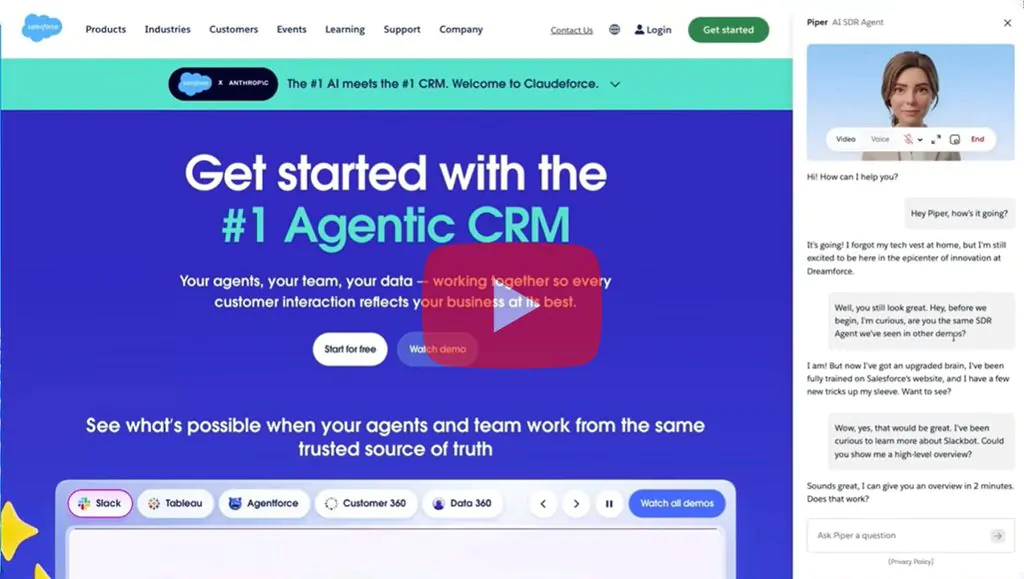
👉 Watch Piper give a buyer a live, tailored pitch on a website.
What Piper looks like for your buyers
Picture a few of the people who visit your website this week.
- Answers questions 24/7 and books the call. A visitor on your pricing page at 10pm asks a question. Piper answers from your product pages and books a call with the rep for their state.
- Tells account managers when their customers come back. When someone with an open deal returns to your website, Piper answers their question, passes them to their account manager, and posts an update in Slack. Your rep knows they’re back, and what they asked.
- Follows up by email when a lead isn't ready yet. Someone downloads a guide but isn't ready to talk. Piper follows up by email, so they're not forgotten.
- Steers different buyers to the right team or offer. A school or a not-for-profit can be steered to a different offer or team, based on who they are.
For your sales team, that means fewer leads lost overnight, and more meetings with people who are actually ready to talk.
Want proof? Salesforce runs Piper on its own website. It took 30 days to set up. Since April 2026, it's been booking more than 60 sales meetings a week.
Before Piper: what we've learnt about sales pipelines
Your salespeople were hired to sell. Most of their week goes on everything else.
In Salesforce's State of Sales report, reps said 70% of their time goes on tasks that aren't selling. Typing up notes. Sorting leads. Chasing details across systems.
We see it all the time. And the first fix usually isn't AI.
At Smart Energy, one of Australia's leading solar retailers, lead details were being entered twice. We connected its phone system to Salesforce, so every call and outcome is logged once.
At Yomojo, a growing telco, leads lived in Excel. In six weeks, we moved them onto Salesforce Sales Cloud, with one view of every lead from first contact to renewal.
Once the basics are in place, AI agents can take on the next layer. Since early 2025, long before Piper arrived, we've been building them for sales teams.
At Expert Wealth, a Sydney financial planning firm, advisers were losing hours to sorting leads, collecting details and setting up meetings. We built an AI agent for its website that does the first conversation for them. It asks visitors about their goals, recommends the right package, and books them in with the right adviser. Qualifying a lead and booking a meeting now takes half the back-and-forth.
Piper does a similar job to Expert Wealth's agent, ready-made: the first conversation with every inbound lead. But it can only book "the right rep" if your CRM knows who that is. That's why the groundwork comes first.
Getting started with Piper
- Agree on what a good lead looks like. Get sales and marketing in a room and write it down on one page: business size, industry, location, need. Piper qualifies against your rules, so a clear definition means your reps only meet people worth meeting.
- Check where your leads go today. Look at every territory and routing rule. Does a lead from Perth still go to someone who moved roles? Fix it now, so every meeting Piper books lands with the right person first time.
- Choose the content Piper can use. Pick the product pages, FAQs and case studies you're happy for it to quote. Salesforce left its own blog out. Your answers stay accurate and on-message.
- Start on the pages where buyers decide. Your pricing, contact and case study pages are where serious visitors land. Switch Piper on there first.
- Measure one number. Meetings booked from your website, or how fast a lead hears back. Track it before and after, so you know what Piper is worth.
Your best lead this month might arrive at 9pm on a Sunday. Piper makes sure someone's there to say hello.
What would your reps do with more of their week back? Book a 30-minute chat. We'll look at where your leads go today, and where Piper could catch the ones slipping through.