

💡 By 2030, your customers won’t be waiting on hold. They’ll be wondering why you didn’t contact them first.
The shift toward proactive, AI-powered, and connected service is already underway. But many contact centres are still built around outdated models, including reactive support, siloed systems, and high-friction experiences.
According to new research from Metrigy, a leading firm in customer experience insights, expectations are changing faster than most teams can keep up. Contact centres that don’t evolve risk losing customer trust, operational efficiency, and their competitive edge.
This blog unpacks what’s changing, what your customers will expect by 2030, and what you can do now to stay ahead.
Customers Expect Proactive Customer Service, Not Constant Noise
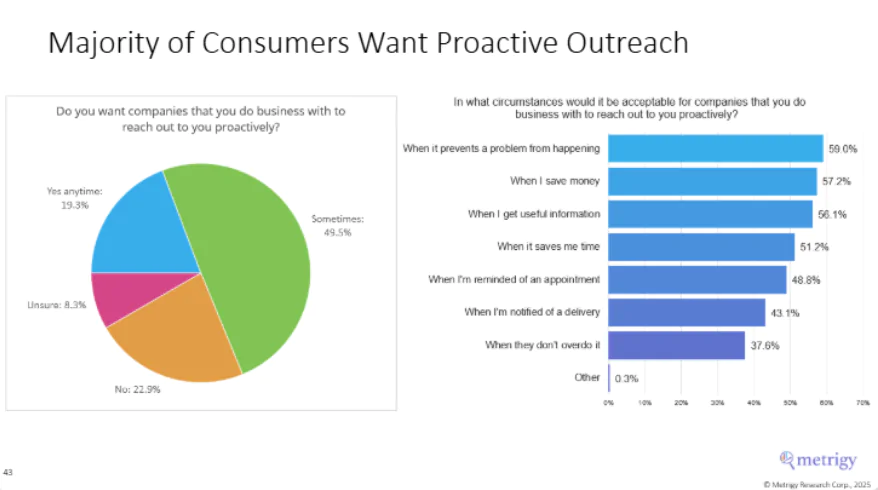
By 2030, the best customer service won’t respond to problems. It will prevent them.
We’re talking about things like:
- A service reminder before a customer needs to ask
- A quick message when a delivery runs late
- A check-in when a high-value customer goes quiet
Metrigy found that most companies believe their contact centre will shift from mostly inbound to mostly proactive within just three years. Not ten. Three.
But being proactive doesn't mean sending five messages a day. Customers still value personal space. On average, people say 3 to 4 messages a week is about right. Push it too far, and even helpful updates start to feel like spam.
This is where personalisation becomes essential. Your team needs to understand the customer’s context: what they’ve already been told, whether they’re in the middle of an issue, or if it’s just not the right moment to reach out. Without that layer, proactive service quickly becomes annoying service.
The best contact centres will build in controls. Message caps, smarter triggers, and AI that helps agents see the full picture before they hit send.
AI in the Contact Centre Isn’t Optional At All
You don’t need to squint to see where things are heading. AI is already taking over the basics: routing calls, answering routine questions, summarising cases, and nudging agents with the next-best action. Even self-service has grown up. It's faster, smarter, and customers actually use it.
According to Metrigy, companies using agent assist tools are seeing real results:
- Agent attrition reduced by 24.3%
- Average handle time down 28.3%
- Customer satisfaction up by 31.1%
- Sales increased by 28%
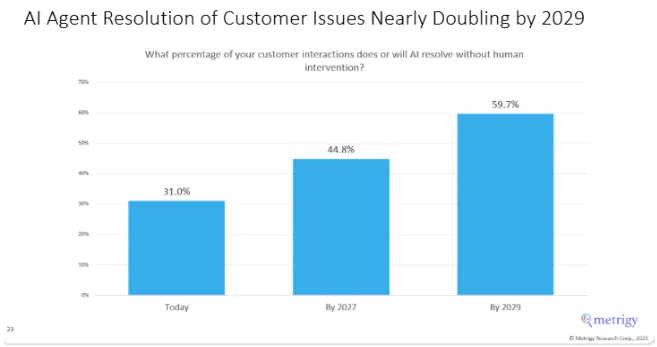
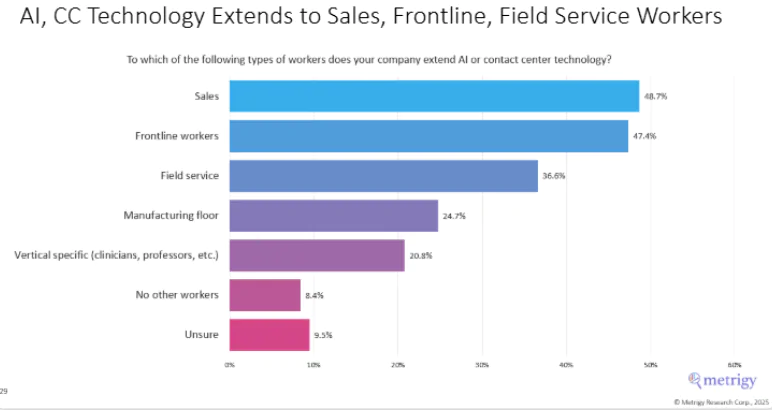
While AI can now handle a significant share of simple interactions, not everything should be automated. No one in a medical emergency would like to talk to an AI agent.
The quality of work still comes down to people, and how well technology supports them.
Customers still value:
- Personalised service that understands their history and intent
- Seamless handoffs to human agents when needed
- Empathy and judgement that AI can't replicate
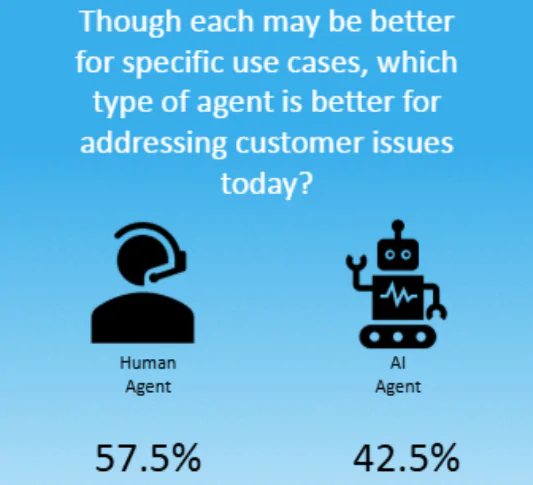
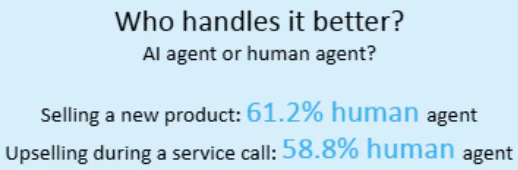
Even as AI tools mature, the research shows that human agents still outperform AI on complex issues and they play a critical role in customer trust and satisfaction. The future is not AI versus humans. It is AI supporting humans to deliver faster, smarter, more personal service.
The CRM Is Becoming the Contact Centre
For years, the contact centre platform was the main workspace hub. Calls came in, chats popped up, and agents worked through tickets while switching between a bunch of tools. The CRM was just something they opened for background info. But that’s already changing.
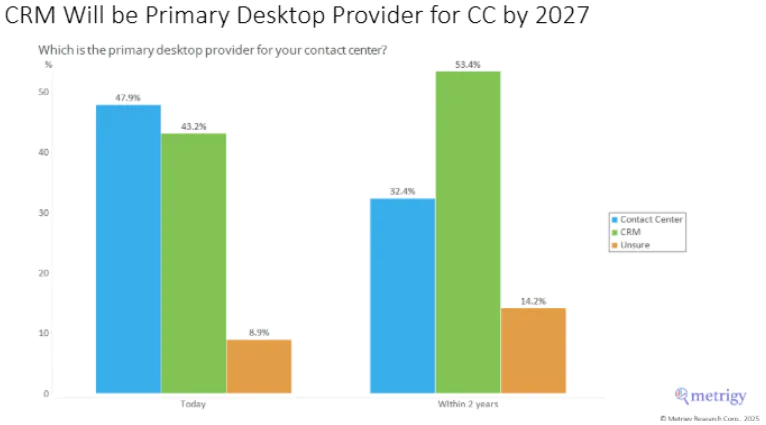
More and more, the CRM is becoming the place where everything happens. It holds the customer’s full history. It connects service, sales, and marketing. And it’s where AI actually becomes useful, because all the data is in one place.
By 2030, the CRM will be the primary desktop for contact centre teams. Not just a system of record, but the platform where agents do their work. Say goodbye to switching between five different systems. Everything is connected, from call logs to case notes to real-time recommendations.
It also makes AI more accurate. Whether you’re using Agentforce or any kind of automation, these tools only perform well when they have the right data. And the CRM is where that data lives.
We’re already helping teams move in this direction. Instead of stitching together disconnected platforms, we bring voice, messaging, triage, and case management into a single workspace inside Salesforce. It’s faster, cleaner, and delivers a better experience for both agents and customers.
Where to Go from Here
Getting ahead of 2030 doesn’t mean overhauling everything overnight. It means making smart moves now that set your team up for scale, speed, and better service.
Here are four key areas to focus on:
- Bring your tools into the CRM
A disconnected tech stack slows everything down. When your CRM becomes the core workspace, agents get full context, fewer clicks, and your AI becomes smarter.
Review which tools can be replaced or integrated into your CRM. Prioritise moving your agent desktop into a single Salesforce workspace. - Start small with proactive messaging
You don’t need to do everything at once. Begin with one journey, such as appointment reminders or delivery updates, and automate it with personalisation built in.
Pick one frequent contact driver and build an automated message journey around it. Set rules for message volume and timing to avoid overwhelming your customers. - Use AI to support your agents
Agents are being asked to do more, across channels, with more complexity, and at higher volume. AI should help them, not just offload work. They need tools that surface insights, reduce busywork, and help them make better decisions.
Map your agent workflows. Identify friction points and repetitive tasks. Start a pilot with Agentforce or another copilot tool to summarise calls, triage cases, or recommend actions, all within the CRM. - Measure what actually matters
"You can’t manage what you can’t measure" still holds true. Traditional metrics like response time matter, but by 2030, success will also be defined by customer effort, satisfaction, and feedback.
Add experience-focused KPIs such as CSAT or effort score to your reporting. Use Salesforce dashboards to monitor trends and spot issues before they affect retention.
The future contact centre isn’t just faster. It’s smarter, more connected, and more personal. AI, automation, and proactive service will define the next generation of support, but only if they’re built on the right data and systems.
With the right steps, your contact centre can stay ahead of rising expectations and deliver a better experience across every interaction. Ready to futureproof your contact centre? Let’s talk.