When something really goes wrong, your customers don’t open a chat. They call.
Those become a big factor whether a customer stays. And at an average of $15.29 a call in Australia, every one that isn’t fixed the first time costs you twice.
You'd hope your best person takes that call, not someone in their first week. Now that's possible on every call, at any hour. Only this time, it's an AI voice agent that answers straight away, knows who's calling and fixes it on the spot.
That’s the bet behind Salesforce’s deal to buy Cresta, announced on 2 November. Here’s what Cresta is, why Salesforce wants it, and why it matters more in Australia than almost anywhere.
What is Cresta?
Cresta started in 2017 out of Stanford's AI lab. Co-founder Zayd Enam left his PhD to build it, after studying how contact centre staff actually work. The idea was simple: find out what your best people do on a call, and help everyone else do it too.
Over time, that idea grew into 3 things that work together:
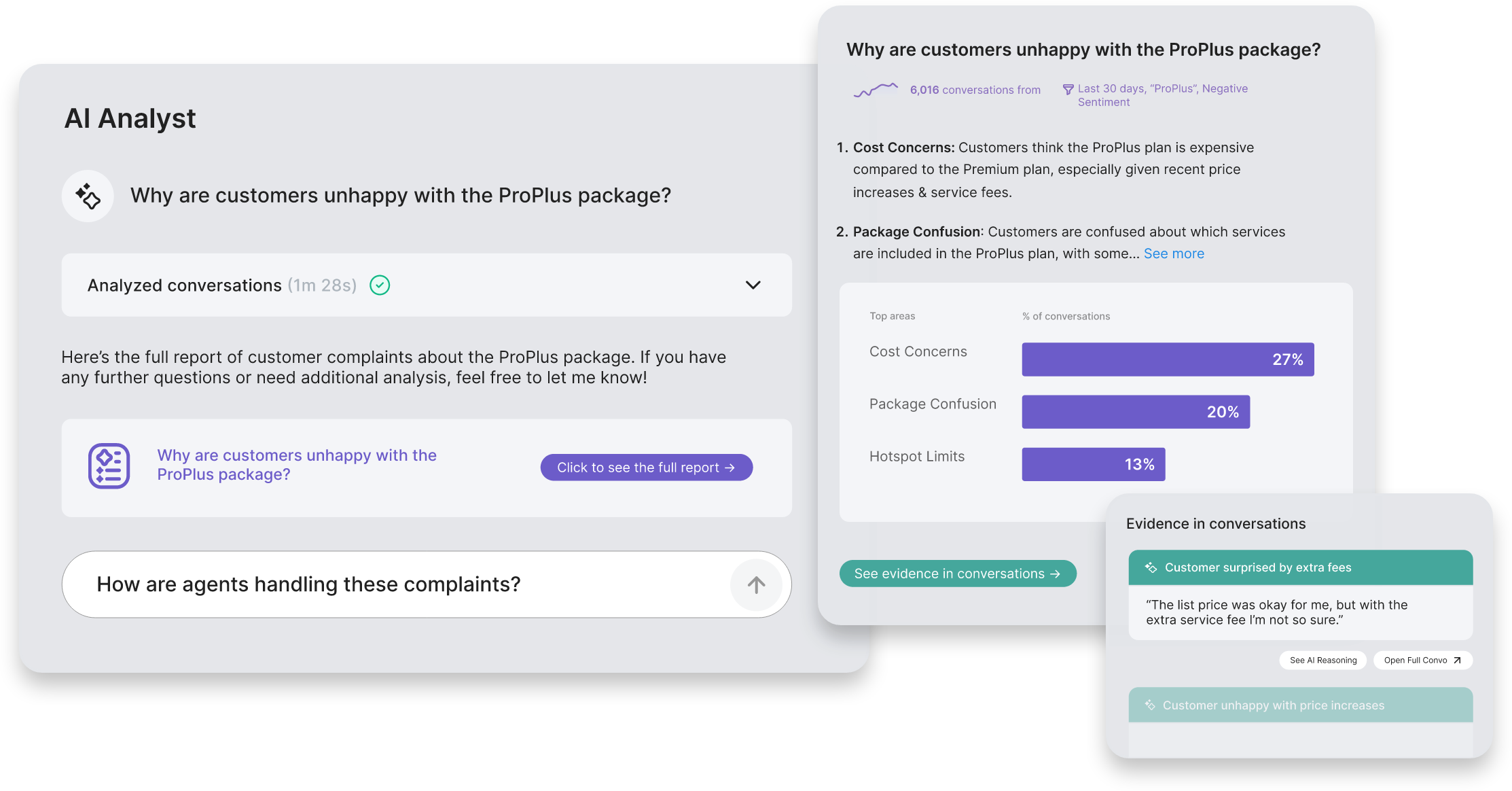
- It learns from every conversation. Cresta reviews every call, not just the few a team leader has time to check. It spots what your top performers do differently. In one study of retention calls, Cresta found top agents offered 20% fewer discounts than average ones. They listened first, then recommended what fit.
- It helps your people in the moment. That know-how doesn't sit in a report. When someone on your team takes a call, Cresta listens along. It pulls up the right knowledge article, suggests what a top performer would do next and writes the call notes, while the customer is still on the line.
- It answers calls itself. Then came the obvious next step. If Cresta knows what a great call sounds like, it can teach an AI to make one. Its voice agents talk naturally, cope when a customer interrupts or changes their mind, and sort complex calls from start to finish. Cresta tests them on realistic callers before they meet a real one, and holds them to the same standard as your people.
That's why Salesforce calls it "the voice-first operating system for customer experience". Your team and the AI learn from the same calls, and get better together.
It's not just for service, either. Businesses use it for sales, collections and keeping customers who want to leave. Marriott, Comcast and Alaska Airlines run it on their phones, and Cresta has raised more than US$270 million, with an APAC office in Melbourne.
What that looks like for your customers
- Fixed on the first call. Fewer "let me check and call you back" moments. Cresta says Brinks Home lifted first-call resolution to 75% and cut transfers from 30% of calls to 8%.
- No more being passed around. When a call does need someone else, the next person already has the story. Nobody has to explain twice.
- Faster answers for simple things. A voice agent can pick up straight away for the routine calls, which frees your people for the hard ones.
- A better reason to stay. When someone rings to cancel, your team gets the words that have kept customers like them, not just a discount to throw at the problem.
- Help that knows who they are. Connected to Salesforce, the call knows their history, their orders and their last complaint.
- They get to keep using the phone. Nobody has to download an app or switch to chat to get good service. They just ring.
Salesforce is filling in the gaps
Look at the pattern.
Informatica last year, for data. Fin this year, for AI service agents. Braze last month, for real-time engagement. Now Cresta, for the phone.
Salesforce has always been strong on the record. Who the customer is, what they bought, what they rang about last March. But the call itself, the actual conversation, has mostly lived somewhere else.
Cresta will plug into Service Cloud, so each conversation links to the customer and what happened next. Salesforce says Cresta will keep working with the phone systems businesses already run, like Genesys, NICE, Five9 and Amazon Connect.
And there's more coming on the phone side. Salesforce is retiring Open CTI, the older way many businesses connect their phones to Salesforce, on 28 February 2028.
There are 2 ways forward, and both are an upgrade. Agentforce Contact Center is Salesforce’s own phone system, run end-to-end with no third-party vendor. Partner Contact Center lets you keep the phone provider you already use, including Amazon Connect. Either way, calls sit in the same queue as chats and email, with live transcripts and suggested next steps for your team. When an AI agent hands a call to a person, the full transcript goes with it.
Put that alongside Cresta and the phone stops being just a cost. AI won’t only learn from every call. It will help take them. Voice agents pick up the routine calls, your people get live help on the hard ones, and your contact centre can handle more without adding headcount.
Why it matters here: Australia still picks up the phone
Most of the AI in customer service so far has gone into chat. It's tidy and easy to measure.
But Australians still use the phone to call for urgent problems. ContactBabel's 2026 research found phone calls make up 64.3% of inbound contacts here, well above New Zealand at 53%. And that $15.29 call costs about twice what a web chat does, at $7.75.
Salesforce knows it. "Voice is where service is hardest to get right, and where it matters most to customers," says Kishan Chetan, who runs Agentforce and Service Cloud.
Why we're excited: your best person, at scale
One thing we keep seeing: every service team has a few people who just get it right. And what they know is very hard to pass on.
Think about how that know-how spreads today. A new starter shadows them for a few weeks. A team leader reviews a handful of calls a month. A good tip gets shared in a team meeting, if someone remembers it. By the time it reaches everyone, the team has changed.
Cresta changes the maths. It learns from every call your best people take, then brings that know-how to every person and every voice agent, on every call, while the customer is still on the line. No training program can match that reach, or that speed.
That’s what has us excited. Not AI replacing your best people. AI that helps everyone else work to the same standard as your best.