
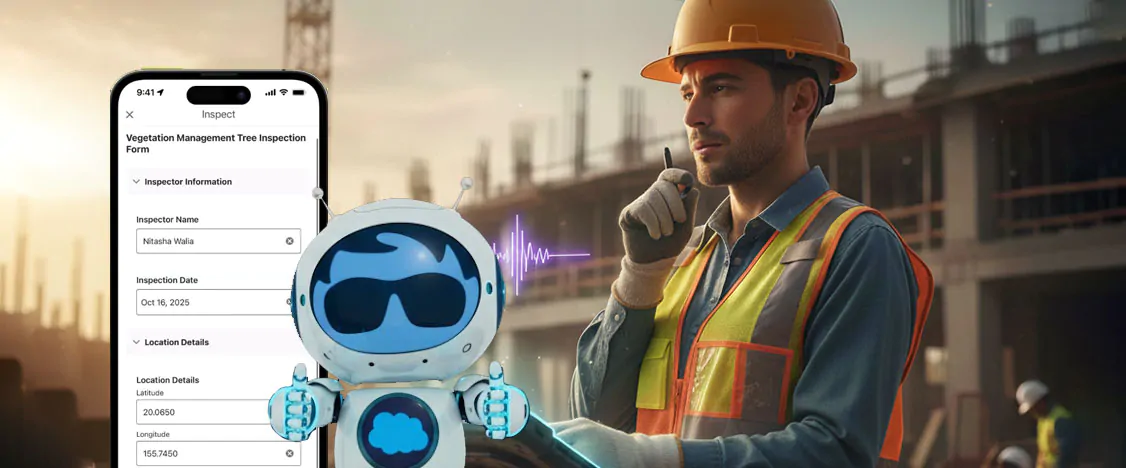
Anyone who works in the field knows the pain of post-job admin. Even with mobile apps, closing out a work order still means tapping through screens and typing out notes in the sun or the rain, and trying to capture every detail before heading to the next site.
The investment in AI-powered field service capabilities isn’t slowing down. In fact, it’s accelerating. According to our research, 85% of field service leaders believe their AI investments will increase over the next year. They’re not just optimistic about the technology. They’re committing resources to it. And so are we.
That’s why we’re excited at ProQuest about Voice to Form, a feature that lets field workers talk naturally while Agentforce captures the details and enters the information straight into the work order. Say goodbye to typing and tapping. It is the next step forward in the evolution of field work, moving from paper to mobile to voice.
A Quick Recap: Paper → Mobile → Voice
Field service has always adapted to the tools available. First came paper. Clipboards, job sheets, and handwritten notes were passed around, often returned to the office hours or days later. It worked, but it left too much room for delays and missing information.
Then came mobile. Technicians could access schedules instantly, submit job details on-site, and close out work faster. Platforms like Salesforce Field Service helped teams become more connected, efficient, and responsive.
But the job keeps moving. Field teams are expected to cover more ground, manage more data, and deliver faster results. Even with mobile apps, documenting work can still feel like a task that gets in the way. When time is tight, it is easy to miss important updates or skip admin entirely.
That is why the next step is all about simplicity. The focus is on making it easier to capture what happened on-site, while it is still fresh. When that becomes effortless, the whole workflow improves.
What It Means for Field Crews
Voice-to-Form delivers on that next step. Here is what that looks like on the ground:
- Voice-Powered Job Closure
With Voice-to-Form, technicians are guided through the process step by step and can wrap up as soon as the work is complete.
- Press and talk with Voice-to-Form to start
- Speak through parts used, work completed, and any follow-up needed
- Agentforce captures and logs the information into the work order
No typing. Just a quick, natural way to finish the job while everything is still fresh.
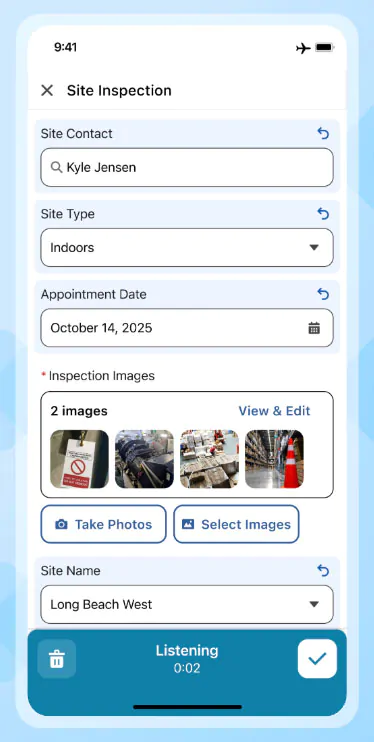
2. Real-time updates that future techs will thank you for
Voice-to-Form helps job records stay consistent. As technicians speak, the system identifies key details and updates the correct fields such as parts used, actions taken, and follow-up required.
This real-time data capture ensures that information is logged immediately and in the right format. It helps:
- Dispatchers and managers stay informed as the job progresses
- Admin and billing teams access the details they need without delays
- Future technicians arrive on-site with a clear and accurate history of previous work
By removing the friction from updating records, Voice-to-Form supports better handovers, stronger collaboration, and more reliable field operations.

3. Faster Job Turnaround
When technicians no longer need to stop and fill out forms manually, jobs move faster. Voice-to-Form removes the slow steps at the end of each visit by letting updates happen in real time through speech.
This keeps the day running smoothly:
- Less time spent on admin after each job
- Fewer delays between appointments
- A more consistent and efficient flow across the team
It means more time spent on the work that matters, and less time lost to follow-up admin or incomplete records.
What’s Next: Voice-Activated AI Agents That Actually Do the Work
In the future, we expect voice to play a much bigger role across field workflows. It will not just be about updating forms or logging information. Voice could eventually trigger full processes in the background, with AI handling the follow-up tasks.
For example, a technician might say: “Replaced filter, tested unit, no issues. Book follow-up in six months and notify the customer.”
From that one spoken input, the system could update the asset, create the follow-up job, notify the customer, and log the activity. No extra steps. No manual handover.
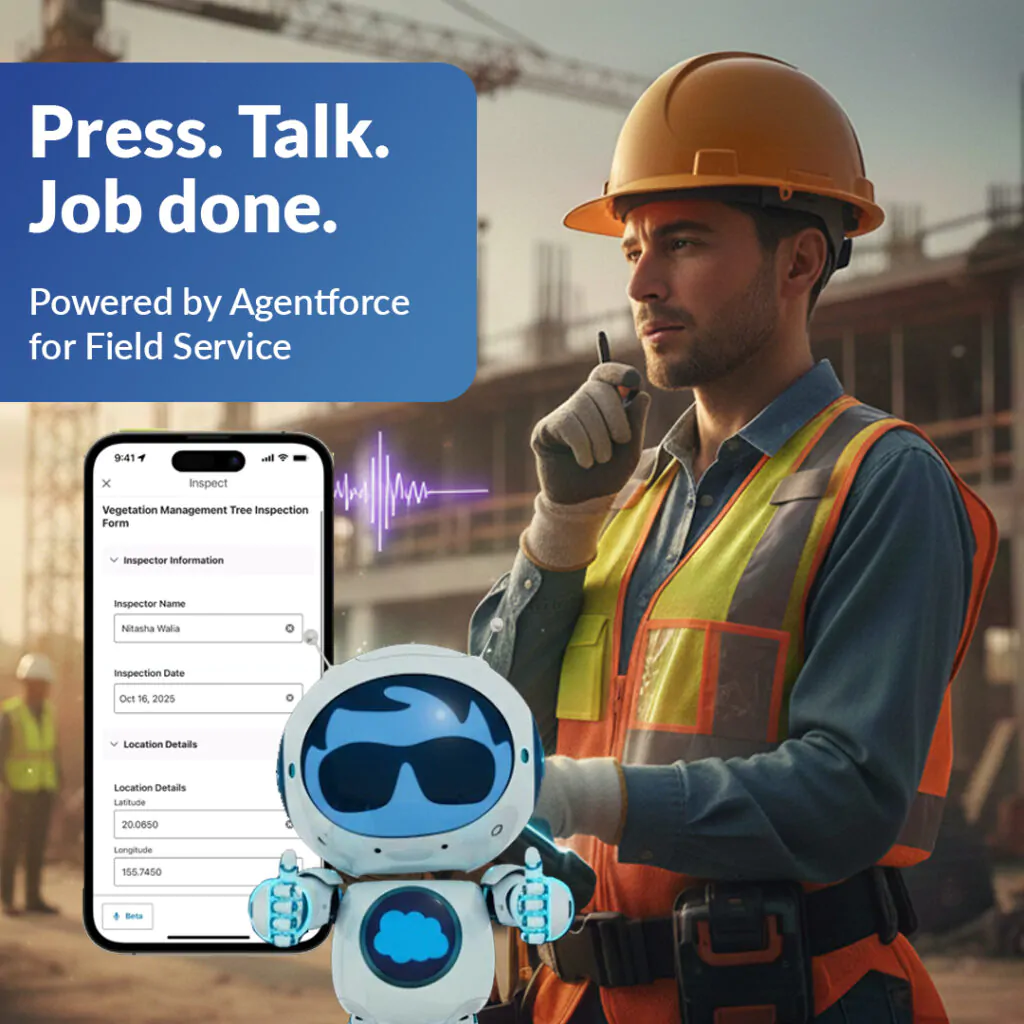
This type of hands-free automation is part of the vision for Agentforce for Field Service, and some of these capabilities are already available in Beta. While not yet generally available, the foundations are in place and we expect to see further developments in early 2026.
At ProQuest, we are following this closely and ready to help your team explore what is possible today and plan for what comes next. As Australia’s leading Salesforce Field Service partner, we are here to help your technicians close jobs faster and improve satisfaction across the board.